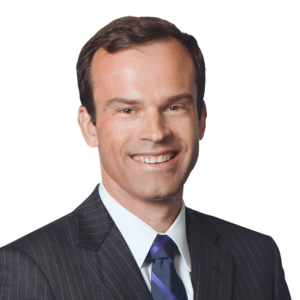
In what is being hailed as the largest Sarbanes-Oxley retaliation recovery in U.S. history, whistleblower Carlos Domenech won a $34.5 million judgment in March after a protracted nine-year legal battle against his former employers Terraform Power (TERP), Terraform Global (Global), and top executives and board members of the former renewable energy giant SunEdison and its affiliates. The victory delivers justice for Domenech, who was fired after raising concerns about financial misrepresentation, and sets a historic precedent for whistleblower protection under federal law, says Hinckley Allen attorney James Tuxbury, who represented him.
The Rise and Fall of a Renewable Powerhouse
Domenech joined SunEdison in 2007 after 15 years as chief financial officer at General Electric. He helped take the company public and later was the president and CEO of SunEdison’s publicly traded subsidiaries TERP and Global. By 2012, SunEdison had grown into one of the world’s largest renewable energy firms. However, that growth masked a looming financial crisis. Domenech discovered that SunEdison’s CEO Ahmad Chatila and CFO Brian Wuebbels had misrepresented the company’s liquidity. Despite claiming $1.4 billion in cash, Domenech’s review showed only about $350 million on hand, with far more in outstanding obligations. “I tried to help them correct the problem,” Domenech says. But when SunEdison’s officers continued to issue statements that he’d warned against, Domenech felt he had to act.
Raising the Red Flag
As required under the SarbanesOxley Act of 2002, Domenech and eventually two other executives reported their concerns to SunEdison’s board, led by chairman Emmanuel Hernandez. Rather than investigate, the board hired a securities lawyer. “The chairman said, ‘Trust me, we’re going to do the right thing’ – but it didn’t go anywhere,” Domenech says. “Ultimately, the company wanted to go forward despite complications. Ahmad is not a guy you go against. So, knowing all of that we took the risk, and we said the forecast the company is putting forward makes no sense. And that was the point of no return.” Domenech was abruptly fired on November 20, 2015 – a day dubbed the “Friday Night Massacre” among financial publications. That same night, Global and TERP’s CFO and independent board members were also ousted. “Ahmad Chatila said this is allout war, you guys versus me,” says Domenech. Within hours, the new board approved a $150 million transfer from Terraform Global – funds previously withheld over governance concerns. Another $85 million was wired two weeks later. SunEdison filed for bankruptcy in April 2016. “The system was designed to wear Carlos down,” says Tuxbury. “If the company hadn’t gone bankrupt, I think they would have buried me,” Domenech says.
A Case Like No Other
Domenech’s legal team, led by Tuxbury, filed suit against TERP, Global, Chatila, Wuebbels, Hernandez, and board member Peter Blackmore, citing Sarbanes-Oxley. “This was not a typical case,” says Tuxbury. “It’s likely the largest recovery under Sarbanes-Oxley and maybe the largest wrongful termination judgment of its kind. The complexity, the corporate web, and the bankruptcy – all of it made this a nine-year battle.” The lawsuit was delayed repeatedly by motions, multi-district litigation transfers, and the COVID-19 pandemic. By 2017, Global had ceased to exist, having been acquired by Brookfield Renewable Partners. TERP was later also acquired by Brookfield. Most witnesses no longer lived in Maryland, where the case was filed, so nearly every deposition was treated as trial testimony. Even the US Supreme Court played a role. In 2023, it heard Murray v. UBS, a case that clarified standards for proving retaliatory intent under Sarbanes-Oxley. Domenech’s team paused proceedings for six months awaiting that ruling.
Governance Failures Exposed
The case revealed severe governance failures. Rather than act on Domenech’s warnings, the board retaliated. Internal records showed the board was aware of the liquidity crisis but chose concealment. One chilling piece of evidence came out during a staff call the day after Domenech was terminated, when Chatila said: “If you don’t row in the same direction, we will eat you alive and spit you out.” Former executive Paul Gaynor documented the threat in real time, and it became pivotal trial evidence.
Personal Toll and Professional Resilience
Domenech did everything whistleblower statutes encourage: raised concerns internally, alerted the board, and sought resolution through governance before taking legal action. He never went public with the information until after his firing, Tuxbury says. And yet, he paid a heavy price. “The emotional and professional toll was enormous,” Domenech says. “We were hitting every financial target at TERP and Global. We were in great shape – but because we refused to go along with deceptive behavior, we were removed.” Despite being blacklisted by many in the industry and enduring years of litigation, Domenech rebuilt. Today, he’s the CEO of a private energy firm and mentors others on corporate ethics and governance. “If I had to do it again, I would,” he says. “But I wish more executives understood their responsibilities – and that whistleblowing is not about revenge. It’s about integrity.”
A New Roadmap
This case may serve as a turning point for whistleblowers. Tuxbury says it demonstrates that while the path is long and arduous, the courts can deliver justice – even against powerful defendants. “Carlos carved a path through the jungle,” Tuxbury says. “Hopefully, the next whistleblower won’t have to spend nine years to prove they were right.” Passed in 2002 after the Enron and WorldCom scandals, Sarbanes-Oxley enforces accountability and protects whistleblowers. Yet few cases yield such judgments, underscoring the rarity – and importance – of Domenech’s win. “This wasn’t just a financial victory,” says Domenech. “It was about showing that the system can work, even if it’s broken. And it was about making it safer for the next person to step up and tell the truth.”